Comprehensive Pest Control Solutions in Toorak Gardens
Protecting your home from pests is essential for a healthy environment. Our comprehensive pest control solutions in Toorak Gardens address infestations from insects to rodents. Using advanced techniques and eco-friendly products, we eliminate pests while safeguarding your loved ones. Trust our expert team to deliver effective, long-term protection against pest invasions, ensuring a pest-free living space.
Why Choose Professional Pest Control?
Why opt for professional pest control over DIY methods? Professional services offer accurate pest identification, targeted treatments, and lasting results. DIY solutions often provide only temporary relief, missing the root cause of infestations. Our experts employ advanced, eco-friendly techniques for thorough pest management. From inspection to prevention, we handle every step, ensuring superior results. Rely on us for efficient, safe, and dependable pest control.
24/7 Emergency Response
Residential Pest Control
Commercial Pest Services
Residential Pest Control
Keeping your home pest-free is vital for your family’s well-being. Our residential pest control services in Toorak Gardens tackle a range of infestations, such as termites, ants, and rodents. We offer thorough inspections and customised solutions to ensure your home remains protected. Count on our dedicated team for a healthier, pest-free living environment that ensures your peace of mind.
Commercial Pest Control
Maintaining a pest-free business is crucial for preserving your reputation and meeting health standards. Our commercial pest management services in Toorak Gardens serve various industries, providing effective, tailored solutions with minimal disruption. We develop customised pest management plans to suit your business’s needs, ensuring a safe environment for clients and employees alike. Partner with us for reliable protection of your enterprise.
Complete Pest and Vermin Control Solutions
Our skilled team provides complete control solutions for pests like ants, spiders, termites, and rodents. We focus on both elimination and prevention, ensuring your property stays pest-free year-round. Through our comprehensive approach, we deliver the security and peace of mind you deserve, keeping your property safe from infestations.
Emergency Pest Control Services
Unexpected pest emergencies require immediate attention. Our fast-response emergency pest control services in Toorak Gardens are designed to quickly address urgent situations. Trust our experienced team to deliver rapid solutions that restore safety and minimise property damage when it matters most.
Licensed Technicians
Regardless of whether it’s a business you own or simply your family home, we will inspect your property and eradicate pests and vermin.
At Best Pest Control Adelaide, we are committed to providing tailored pest control solutions in Toorak Gardens. Contact us today for expert help in protecting your property from pests. Enjoy peace of mind with a healthier, pest-free environment for your home or business!
The list below shows the suburbs in the local council area of Burnside. Looking for professional pest control services? Please click on the suburb name where you’re located. Remember we’re just a call away.
CALL NOW: 08 6169 5012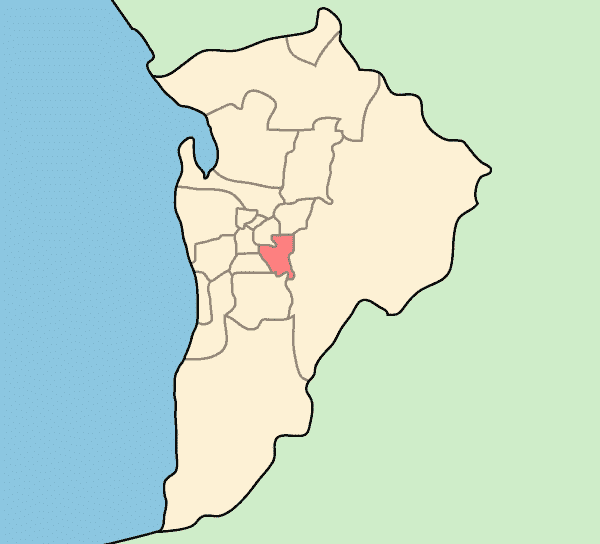
Toorak Gardens is a leafy, mainly residential inner eastern suburb of Adelaide, South Australia, located 2 km east of the Adelaide city centre.
This is one of South Australia’s most expensive suburbs. It is characterised by tree-lined streets and detached single story villas, Tudor Revival and bungalow houses built in the 1920s and 1930s on allotments of around 0.25 acres (0.1 hectares).
The Toorak Gardens area was part of the then larger and now adjacent suburb of Rose Park. Between 1912 and 1917 it was named "Toorak" and subsequently "Toorak Gardens". Originally farmland owned by the Fergusson and Prescott families in the 19th century, it was subdivided and gained popularity in 1920s.
First Creek, part of the Torrens catchment, runs through the north-east corner of the suburb. Toorak Gardens is in the local government area of the City of Burnside, and is bounded to the north by Kensington Road, to the east by Portrush Road, to the south by Greenhill Road and to the west by Prescott Terrace and Warwick Avenue.
It contains the Burnside War Memorial Hospital; converted from a grand mansion in 1949–it remains Burnside's only local community hospital.
Possibilities for derivation of the name Toorak are Torrak, an aboriginal word meaning tea-tree springs, toora an Aboriginal word for coot or malleefowl and other aboriginal words of similar pronunciation meaning reedy swamp and black crow. Today's suburb of Toorak Gardens is composed of parts of the Adelaide sections of 275 (Toorak) and 274 (Monreith Farm). Section 274 was bounded by (in clockwise order) Swaine Avenue, Portrush Road, Greenhill Road and Fullarton Road. Section 275 was bounded by Kensington Road, Portrush Road, Swaine Avenue and Prescott Terrace. The suburb of Toorak was first developed in 1912, largely on land that had previously been the eastern half of the Prescott Farm. Before its development into a village, it had been farmland up until that point with little settlement apart from the Prescott's home and worksheds as well as two large and extravagant houses. Julia Hallett owned a spectacular mansion on Portrush Road (now located at No. 15) while Benjamin Burford had a grand mansion on Kensington Road that he named Attunga. When the suburb was first planned, laid-out and named there were many objections, primarily because of the association with the elite Melbourne suburb of Toorak (which remains wealthy and upper-class to this day). The real-estate agents assigned to the suburb received many complaints due to this association, including one signed 'No Snobbery'. Extensive building restrictions were placed on development in the early suburb. After the first houses had been built, the Adelaide Mail reported on 18 May 1912:
Toorak received considerable attention from real-estate businesses, the press and the community at large. The Adelaide papers paid particular notice to the suburb's developments, announcing council work on the suburb's paths and gardens. In 1912 when trees were planted on Grant and Alexandra avenues, in 1914 when flower strips were developed on the kerbs, in 1916 when a reserve was created on Giles Street; they were all quickly reported. The Toorak Bowling Club was also developed in this era, it stands to this day.
Section 274 was bought by a Scottish family, the Fergussons. It was purchased along with property at Knoxville (today's suburbs of Glenunga and Glenside) and named by the family. They had come from the village of Monreith in Wigtown County, Scotland and gave that name to their new farm. The Monreith farm was steadily developed by the family, but with the death of Alexander Fergusson in 1869, the property passed into the hands of his widow, Agnes. She sold off parts of the farm in 1883 for £15,000, and the remainder in 1917 for £20,000. Before the farm was sold, the Fergussons had established a flour mill, horse stabling and were engaging in business ventures in various parts of the state. It was in 1917 that Monreith was given its modern name of Toorak Gardens. Developers started subdividing the new suburb on much the same lines as Toorak had been, with similar building restrictions and much media attention. The original Fergusson family home was demolished in 1923 and the family settled in separate houses on Cudmore Avenue. Miss Ivy Laver, a successful local businesswoman, was responsible for building the main park of Toorak Gardens, Fergusson Square. It remains as a monument to those who first settled the area.
Benjamin Burford's Attunga property contained the largest and most extravagant mansion built in the suburb, and with his passing it was bought in 1905 by an investor from Broken Hill, Otto Georg Ludwig von Rieben. Although living at the property for 37 years, maintaining it, and paying particular attention to the gardens, von Rieben eventually settled on a property at Mount Lofty in the Adelaide Hills. Attunga however, almost forty years after he gained it, was offered to the Burnside Council free of charge in 1944 for use as a hospital, on the condition that the house and grounds be maintained. A Council committee had previously suggested building a community hospital in August 1943, as part of its Post-War Reconstruction and Development Plan; it was to cost no more than £100,000, and was to remain as a memorial to honour Burnside's war dead. In April 1949 the first conversion of von Rieben's home was completed, as a convalescent home caring for 21 patients. It closed in September 1956, having cared for over 1,400 patients. The adjacent newly completed Burnside War Memorial Hospital opened in October, and received its first patients in November 1956.
According to the 2001 Census, the population of the Toorak Gardens census area was 2,595 and stable, with only a minor decrease in population between the 1996 and 2001 censuses. 55.0% of the population was female, 80.3% were Australian born and over 92% of residents were Australian citizens.
The suburb contains a relatively large stable family population, mainly composed of older parents with their either teenage or young adult children. There is also a relatively large number of 'empty nesters' (older parents in their fifties whose children have left home) and retirees over 70. Toorak Gardens contains a relatively high proportion of residents who live in flats or apartments (28.4%), but the majority still live in separate houses (64.7%).
Residents have a slightly higher than average religious affiliation (72%), with the vast majority of these being Christian (70.3%). The top ten religions (in descending order) were: Catholic, Anglican, Uniting, Eastern Orthodox, Lutheran, Presbyterian, Baptist, Pentecostal, Buddhist and Salvation Army.
Toorak Gardens has an exceptionally educated population, with over 40% holding a degree or diploma. This level of education attainment is reflected in the suburb's employment patterns: the most popular industries for employment were: education, health and community services (27.9%); and finance, insurance and business services (25.2%).
History info courtesy of Wikipedia